Showing posts with label Open Circle Publishing. Show all posts

17 July 2017

Is Kindle broken?


Amazon KDP has been good to me. Way back in 2013, Due Diligence made it into the top twenty crime thrillers and the overall top one hundred kindle charts. You can imagine how chuffed I was. I sold several thousand books in a very short time and all because Stephen Leather invited his readership to try it.

A few years down the line, services like BooksgoSocial and Bookbub will promote your book for a modest fee. They can be picky, though, as they depend on keeping faith with their readers and not fobbing off some rubbish on them. A lot like Stephen, who took the trouble to read the copy I sent him. Not like Stephen because he helped me for free, as he's helped lots of other writers.

Amazon, in order to promote their Prime membership, decided to offer free loans of books that were enrolled in KDP Select. At first they paid authors on the basis of downloads. Then they decided that this wasn't fair. Short books received the same payment as longer ones. It didn't matter if the books were read or not the author got paid regardless. Then Amazon decided to change the basis of payment. Every page read was recorded and totted up and the fund distributed accordingly. Seemed fair to most people at the time.

I quite liked it at first, I had a 'pages read' graph to go with my copies sold one. Some days, I'd pretend the pages read were the copies sold just to make me feel especially good. Then bad things started to happen. I got wind of authors' amazon accounts being removed because of anomalies in their page counts. One of my books took a leap skywards for no reason, thousands of page reads where there had been a steady few hundred before. I got cold feet and took all my books off Select. Losing your Amazon account is fatal for an author in these digital times and I realised that abuse of the new Amazon payment system was likely to become worse. I was right.

Recently, really awful books by unknown authors have been hitting the top of the Kindle charts. Books with very few and very bad reviews. They got their exposure and thousands of sales by what's known as clickfarming.

Clickfarming involves downloading the book hundreds of times and then employing someone to flick through each copy. Let's say a book is 200 pages. After each 200 page views are recorded, Amazon count it as a sale. Then the book is catapulted up the charts, people see it and they buy it.

Not only that, but the author is paid a share of the KU pot on the basis of every page read.

Some organisations offer this service to authors for a fee. Others take all the money themselves by uploading their own books, often computer generated or pirated.

In order to make it more difficult for Amazon to detect them, some clickfarms add some 'innocent' books to the ones they are pushing.

Amazon delete the accounts of anyone they suspect of clickfarming and this seems to have included authors who were completely unaware of what was going on. I've not heard of any successful appeals.

So, keep your eyes peeled, stay sharp and safeguard your precious account. If you're new to Kindle, think twice before enrolling in Select.


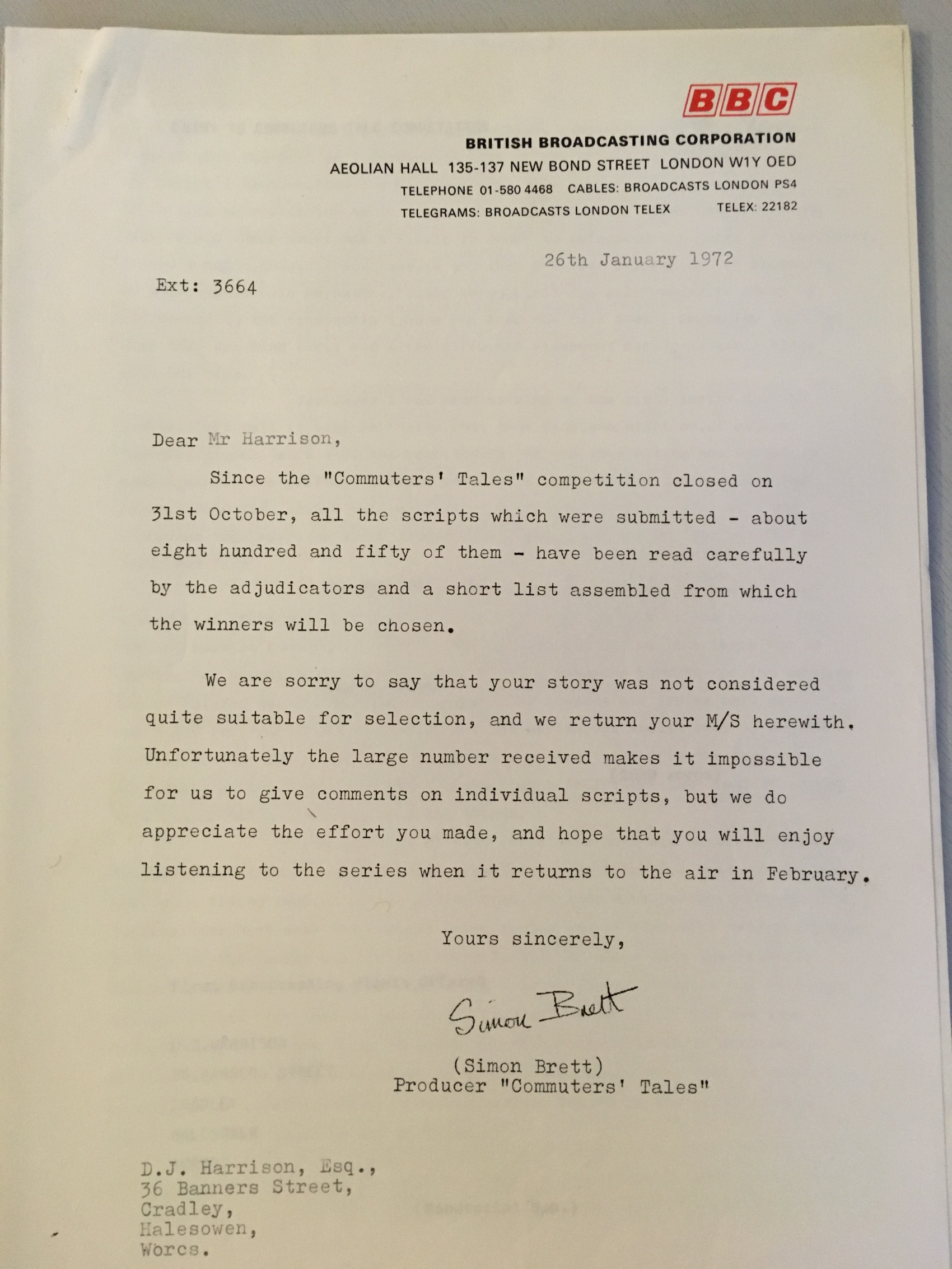
photo credit: ToGa Wanderings Free Internet via photopin (license)

4 July 2017

Publishing, self or otherwise

Writing


I was looking for an image that best represented much of my writing. This is stuff I had to write, stuff I enjoyed writing and stuff that helped me to get a better handle on the process of writing. All good stuff, as far as I'm concerned. Do people lie awake at nights longing to read this stuff?
No.
Neither would they thank me for offering it to them. In the unlikely event that they did read it, they would be mightily irritated. To the extent that they'd shun anything and everything I might show them in the future.
And I don't blame them. It's what I do.

Self-published books

This is an image representing self-published writing. The notice on the bin bag hasn't been edited or proof read, something that 99% of self-published writing has in common. Anyone that reads the label can see that what's inside is rubbish.

Write, by all means. Write as often and as long as you can. Write everything that comes into your head. But try to resist the impulse to publish it until you're absolutely sure it's the best thing to do.

Otherwise, when you do come up with something worth reading, any readership you might hope to attract has long ago written your name on their reading list and crossed it off with an indelible marker.

I was very fortunate. I wrote what I considered to be a cracking SF trilogy. Everyone who read it said it was awesome and brilliant. The problem was that my friends and family weren't professional writers and, worse still, are usually inclined to be kind to me. Neither of these factors was helpful in determining the merits of my novels. What I needed was an objective and knowledgeable opinion from someone used to giving one. A professional critique, to give it its proper title.

My first critique was very difficult to take. It took me years to get over my anger and disappointment but I did come to terms with it eventually. My writing got better, much better. I became conscious of things I do that get in the way of the story and learned to avoid them much of the time.When my first novel was published, I'd improved enough to tell a good story without annoying the hell out of most of my readers. This proved a good marketing ploy because many of the same readers went on to buy more of my work, which gets better all the time. As it should.


photo credit: Mink When will people start to recycle? via photopin (license)
photo credit: garryknight Heavy via photopin (license)

26 May 2017

First Words


It was about eleven o’clock in the morning, mid October, with the sun not shining and a look of hard wet rain in the clearness of the foothills. I was wearing my powder-blue suit, with dark blue shirt, tie and display handkerchief, black brogues, black wool socks with dark blue clocks on them. I was neat, clean, shaved and sober, and I didn’t care who knew it. I was everything the well-dressed private detective ought to be. I was calling on four million dollars.

(Raymond Chandler, The Big Sleep)

Whatever I've been writing, I find that the opening needs to be written last. That might sound a bit contrary but believe me it works much better this way.
I have a tendency, in common with many writers, to start a story with some stuff that is best described as 'backstory'. Information that's necessary for the writer but not needed by the reader. Things like what the protagonist looks like, what he had for breakfast and the number of the bus he gets to work.

These days, I try to write the whole story from beginning to end and then decide what's needed and what isn't. Then I have a go at the opening few sentences to see if they're the right ones for the story.

Openings are of crucial importance. They set the style and tone for the whole piece. They also, crucially, invite the reader to read on. The best openings include enough information on character, setting and plot to engage readers without giving them indigestion.

My favourite opening paragraph is reproduced above. I love everything Chandler wrote but the beginning of The Big Sleep is quintessential Chandler. Here we meet Marlowe, perhaps for the first time. We learn a huge amount about this man from the way he describes himself. Neat, clean, shaved and sober might seem unremarkable but the fact that he takes the trouble to mention it indicates that these are not part of his default state. The details of what he's wearing down to the pattern on his socks shows he's been very methodical in deciding exactly what to wear. And that the meeting is very important. And that Sternwood is very, very rich. And so on. All shown to us in an effortless way that lets us form our own opinion of the protagonist. Awesome. I love it.

Oh, and the second paragraph is just as good. And the third...

If you haven't read The Big Sleep then I suggest you do. If you have read it, read it again and this time remember to marvel at Chandler's technique as well as enjoying the story.


5 March 2017

Characters


There's a big difference between central characters and minor characters. Here's what I mean:

1. Getting punched in the face

Minor character collapses unconscious in a heap, never bothers anyone ever again.

Major character rides the savage blow, comes back for more. And more. No matter how often he's hit, he keeps on going even though he's obviously going to be battered to death. Then, just when you think he's finished, he swings a hay maker of his own and his assailant collapses unconscious in a heap and never bothers anyone ever again.

2. Getting shot

Minor character dies without fuss from a single wound.

Major character staggers slightly, looks down at the blood seeping from his shirt then carries on regardless. May take several more bullets with similar minor effect. By the next scene all traces of injury have gone and he's restored to full fitness.

3. Dialogue

Minor characters rarely speak and if they do it's usually monosyllabic.

Major characters can't stop spouting on. They have an opinion about everything and a back story that they can't resist constant references to. Their speech defines them, makes them real and tells us what we should feel about them.

4. Names

Minor characters, like farm animals, don't usually have names. The reader/viewer has enough information to take in without having to memorise names that may never be heard of again.

Major characters have memorable, carefully chosen, names. Like Bilbo Baggins and Lyra Belacqua. Or Milo Minderbender. Or even Lady 3Jane Marie-France Tessier-Ashpool.

I suppose you're getting the drift, now. But, apart from the potential amusement, why am I pointing this out? I as usual with me, it's a observation that might help my writing. It's important for me to remember to make a clear differentiation between major and minor characters so that readers get a helpful steer on who to engage with and who to ignore. Otherwise, I risk overloading them with information and maybe get myself confused as well.

But how many major characters are allowed? As many as I can keep up with, I suppose. It's a bit like spinning plates, if you're old enough to get the reference. For the younger readers I should explain that it was once considered top class entertainment to watch a man keeping plates balanced on thin poles by keeping them spinning. The audience would gasp with excitement at such a wonderful spectacle, I'm surprised that nobody has been on Britain's Got Talent with such an act. Problem with spinning plates is the ones that fall off and spoil the trick. If a character or plate is going to smash on the ground I'd advise making it happen rather than watching helplessly.

Did you recognise the names I used as examples? In case you didn't they came from The Hobbit, His Dark Materials, Catch 22 and Neuromancer. If there's any of these you've not read I suggest you stop what you're doing and get reading.


photo credit: plynoi Why so serious? via photopin (license)

17 January 2017

a Bit of a Rant about Publishing


If you're reading this then you're almost certainly a reader and you might even classify yourself as a writer. I've written lots in this blog about the process of writing and my own personal experience. It's been a while since I had a proper rant about self-publishing so I'm going to indulge myself. It's Christmas, after all. Or it was not so many weeks ago.

There are lots of books out there. Millions and millions of them. Not many of them are worth reading, even so there's not enough time to read all the good ones. What I'd like to see is a better way of getting through all the dross to find books that are worth my valuable time to read.

We all know that everyone can self-publish at the click of a mouse. This doesn't mean that everyone should. Quite the reverse. This wonderful opportunity should surely be used with discretion. Self-restraint should be the order of the day but I've seen very little of that recently.

I estimate that there are about three million self-published titles. I doubt that one per cent of these are readable. That leaves three hundred thousand that have been reasonably well written and professionally edited. My bet is that one per cent of these, three thousand, are books that I would find enjoyable. Problem is, how do I find them?

About half a million titles per year get traditionally published in the UK and US combined. One of the features of traditional publishing is that they sell books like vegetables. Once they've had a couple of months in the shop window, they get replaced by new fresh produce. This is in sharp contrast to the self-published market where it's very rare indeed for an author to unpublish their beloved opus.

Traditionally published titles have a greater chance of being good books, properly produced and generally readable. Let's assume that a whopping ten per cent would interest me. That's fifty thousand books a year, about a thousand times the number I read.

So, for me, the statistics, even though I'm making them up as I go along, are compelling. I don't have the time to search amongst all the dross for that rare self-published gem. My chances of a good read are greatly enhanced by sticking to the traditional offerings. For this reason, I have never bought a self-published book. Occasionally, I might have a 'look inside' but this generally only serves to confirm their appalling lack of quality.

What's the answer? How can self-publishing be improved to overcome the reluctant buyer like me?

For a start, writers can stop publishing crap. That would even the odds a little. Completing a first novel is a wonderful thing and something to be proud of. Self-publishing it is almost always a big mistake. Very few of us are able to produce work of merchantable quality first time round. Conventional wisdom suggests that a writer needs about a million words of practice. That's the equivalent of ten full length novels. Ten. No matter how special a talent you might be, you're going to need lots of practice and tuition.

Writers can get valuable encouragement and learn their trade by joining a writers' circle and attending writing courses.

Once a writer has produced a good chunk of work, there are useful books on craft that may be helpful. You may even be lucky enough to find someone to read your work who doesn't care about your feelings.

It's a good sign when a writer stops being precious and protective about their work. I'm afraid that most writers never progress to this important stage which is necessary in order to work constructively with an editor. Every writer needs a professional and talented editor.

There you go, rant over for the time being.


photo credit: _Hadock_ Study Time via photopin (license)

14 January 2017

Review of 2017


Dark days ahead?


I really commend the blog written by Tara Sparling, a talented lady that I met at the Harrogate Crime Festival.

https://tarasparlingwrites.com

I mention Tara's blog because I'm about to do something that writers get into big trouble for and that's plagiarism. She's already done a very witty and perceptive review of 2017 and I have been inspired to copy her. Sorry, Tara, but you missed some very important events.

Including:

January

President Donald Trump is sworn in as the most charismatic, intelligent and honest president in history, according to his inauguration speech. President Putin hails him as a visionary and good friend to Russia.

February

A leaked intelligence report revels that Donald Trump and Hillary Clinton were having an affair during the presidential campaign. Trump makes a categorical denial and accuses the media of inventing false news. Hillary Clinton says she didn't know that Trump was Republican and that everyone is entitled to be forgiven for an honest mistake. Bill Clinton refuses to comment.

March

President Trump announces that a wall will be built on the border with Canada to prevent Americans escaping northwards.
Paula Hawkins releases her follow-up novel to The Girl on the Train entitled Another Girl on Another Train.
The UK trigger Article 50 of the Lisbon Treaty confirming withdrawal from the EU.

April

The Canadian Government offers to pay for the wall.
Another Girl reaches number one in the bestsellers. At number two is A Girl on a Train.
Ireland, Denmark, Poland, Holland and Belgium invoke Article 50.

May

President Trump agrees to Canada's offer. Canada point out that the offer was made on 1st April and was meant as a joke. Trump asks the CIA to provide a detailed briefing on the subject of jokes.
The remaining EU members except France and Germany invoke Article 50.
Leicester City, Sunderland and Hull City are relegated from the Premier League. Manchester United and Manchester City share the title. Dagenham and Redbridge both win the FA Cup.

June

Work on the Mexican wall is delayed because of a labour shortage.
France and Germany invoke Article 50, meaning that the UK has nothing left to leave. Teresa May holds a snap referendum which votes to stay in the EU now that Britain is the only remaining member.

July

Trump meets Putin in Moscow. Both men hail a new era of cooperation. Putin promises not to invade anywhere west of Germany.

August

The European Parliament is relocated to Milton Keynes now that Britain is the only member. UKIP change their name to EUPIP and Nigel Farage is elected President of Europe.

September

Britain agree to re-admit all the previous members to the EU, apart from France.

October

Putin visits Trump in Washington. The two men decide to swap jobs for a year in the interests of better understanding.

November

Civil unrest in Russia results in Putin returning to Russia.

December

Civil unrest in the US greets Trump's return from Russia where a week long celebration is held.
Nigel Farage renames the European Union as the British Empire. India, Canada, South Africa, Australia and the West Indies are admitted.
Christmas is moved to July in order to relieve the backlog of undelivered parcels caused by Amazon's drone pilots going on strike.

You thought 2016 was bad?

Happy New Year

7 January 2017

Submissions

img_0820
This is the result of the previous submission I made to the BBC. Note the date. January 1972. It's taken me this long to recover from the feeling of disappointment. OK, I suppose I'm not quite there yet.
In 1972, submitting a script was much more difficult than it is today. There were no computers, printers, photocopiers, email, internet or automatic spell checks. I had to type out my manuscript on a typewriter, a process akin to carving out letters on to tablets of stone. Mistakes were impossible to correct. They hadn't even invented Tippex in those days.
The kindest thing I can say about my 1972 submission was that it was typed reasonably neatly.
I'm now used to working with an editor, as you will have gathered from previous posts. I love the freedom this gives my novel writing. I am relieved from having to guess what works and what doesn't. An editor tells me in no uncertain terms. I'm more happy to accept criticism these days now that I recognise it as an essential part of my writing process. You note I use the term more happy and not just happy.
I've (bravely) put the BBC disappointment behind me and have sent them another script, 55 years on from the first (and only) one. This temerity has to be laid at the doorstep of that distinguished Irish writer and friend, Daragh O' Reilly. He's developed a bee in his bonnet about radio plays and, just so that I can spend some time with him, I joined him on a course about them. I've always been a big fan of Radio 4  and the prospect of getting something out on the airwaves is a delicious one however remote the possibility might be. Writing for radio is very different to writing a novel. My story arcs tend to be vast, requiring several hundred thousand words to complete. I write novels in batches of three or four. A 45 minute radio play needs only about 7,500 words. This is all a bit sudden for my liking so I've submitted the first episode of a six-part series.
I need to get back to the third Tyrant book now, but, before I do, I'll finish a new radio play that I've started . Then Daragh and I have a joint one to complete. Maybe I'm catching some of what he's got.

4 December 2016

Reviews


This isn't a review site. Usually. Today I'm making an exception.

I like watching TV and I like watching films. I rejoice at the freedom the internet has granted me to watch more or less whatever I want more or less whenever I want to.
There's also the ability to use a ten minute rule without the inconvenience of wasting money or having no alternative. If I'm not captivated within that time, I simply find something else to watch.

I suspect this technique is fairly widespread and applied not only to the visual arts but also to books. We writers need to take lessons from films and television to learn the art of grabbing attention and holding it.

The first item I want to tell you about is a film called Rurouni Kenshin.

I do like kung fu movies, I'm a big fan of Bruce Lee and Kurosawa's Seven Samurai is one of my favourite films. Rurouni Kenshin achieves the almost impossible by bringing a general atmosphere of compassion and gentleness to a story that is essentially a series of fights, some of them quite bloody. The leading character plays a big part in this by being remarkably attractive. He brings to mind Tripitaka from the Monkey TV series. If you remember him you'll know what I mean.
There are two more films in the series, I recommend all three. At least give them the ten minute test.

The second offering I have for you is In the Night Garden. This is something I have been watching in the company of my 2 year old grandson. It's what lets him know it's time for bed. As soon as Derek Jacobi says someone's not in bed he looks guiltily at the screen and heads for the stairs.

I started off being mildly irritated by the whole thing but now it seems to have invaded my subconscious to the extent that it can surface at any time and I start singing the Iggle Piggle song. The facet that the Ninky Nonk can be small (as in the background of the picture) at one instant then big enough to accomodate the entire cast the next doesn't bother me any more. We're all in a dream and reality is only a single facet of that illusion.

These are two very different examples of how to captivate an audience. The brutal opening sequence to Rurouni Kenshin contrasts starkly with the character who emerges into the light. His struggle with inner demons makes for compulsive viewing. At any moment, his peaceful intent may crumble and then he'd be lost forever.
In the Night Garden celebrates the comfort of repetition and familiarity. Nothing much happens. Exactly what your mind needs to slow down and be ready for rest. The entire programme is formulaic to the extent that you can always tell how far you are from the end and, of course, bed time. It's very weird, but good weird.
There's a lot to be learned from films and TV that works. I ask myself what makes me feel connected with the characters and how the author has managed this process. I also need to know what keeps my interest until the end, has me on the edge of my seat.

Next week, I may review Timmy Time and Deadpool. On the other hand, I probably won't.


photo credit: id-iom Why don't you just switch off the television set? via photopin (license)
By Source, Fair use, Link

26 November 2016

Inspiration


As Stephen King will tell you, writers rarely ask each other where they get their inspiration from because we don't know. The more we think about it, the weirder it becomes, so we tend to take it for granted that the ideas will flow.
Some of us find inspiration comes more easily than others. There's this horrible thing called writers' block that gets in the way some times.
I'm very fortunate to have worked with the brilliant and insightful Barbara Turner-Vessalago for many years now. She has taught me the process that I use whenever I write. It doesn't matter what I'm writing, this really works for me.
Most of the time, I'm writing a novel. I used to think that a novel was an enormous almost never-ending task. I was often so daunted by the immensity of it I would feel like giving up. Then I learned that any piece of writing has to be written one word at a time. One word isn't so difficult to do. The next one comes even easier than the first and I'm away.
My starting point is almost always a place into which I parachute my characters and allow them to have a good look around. Then I see what happens and write it down.
Barbara's writing process is called Freefall and I heartily recommend it to you. I have found that most books on writing craft only become useful when I've more or less finished what I'm writing and am looking for technical assistance to make it work. Freefall is so wonderful because it gets me going. Starts me off. I lower my self into a time and place, sniff the air, listen to the rustling of the wind in the trees, narrow my eyes against the setting sun and...
I think you've got the picture.
Until recently, the only access to Barbara has been through her workshops in Canada, Australia and two per year in the UK. I'm lucky in that I've managed to attend at least one a year since 2007. Now, she has published two books on Freefall. Get them. You will find them useful and inspiring.

https://www.amazon.co.uk/Writing-Without-Parachute-Art-Freefall/dp/1908363045/

https://www.amazon.co.uk/Freefall-into-Fiction-Finding-Form/dp/178592172X/

At the moment, I have the fourth Jenny Parker novel away for copy edit. The two Tyrant fantasy novels are sitting in a proverbial drawer maturing and my SF novel, Voyager, has just reached the 30,000 word hump which means it's now got a life of its own and all I have to do is watch what happens and write it down. So I've taken a couple of weeks out to write a radio play. This is really good fun and a complete change to my usual form. As a prelude, I attended an inspirational one-day course presented by a radio producer called Polly Thomas. If I like what I produce, I'm going to actually submit the script to the BBC, who sent me the only rejection letter of my career in 1972.
Wish me luck.


photo credit: SFB579 Namaste Candle-Light via photopin (license)

9 November 2016

Nanowrimo


It's November and time for the horribly named Nanowrimo which provides encouragement for writers to get down and write like hell for a month. 50,000 words is the target and it takes daily dedication in order to achieve it.
I've often referred to the desirability of a daily writing habit and how writing just a little bit every day can accumulate into a major work like a novel. I write about an hour or so most days, sometimes much more but rarely much less. This gives me an output approaching Nanowrimo proportions most months of the year.
As you can see from the banner, I entered Nanowrimo in 2014. I did this specifically to write the fourth Jenny Parker thriller when I'd already committed myself to a fantasy trilogy and a SF novel. It wasn't going to get done otherwise.
The reason for telling you this is twofold. First, if you need an excuse to write every day, a word count objective can be helpful. Secondly, I want to describe what happened to my script after Nanowrimo.
The first draft of Exit Strategy, as it has become titled, was actually 90,000 words and was written during October, November and December 2014. I then put it in a virtual drawer and carried on with my fantasy novels. In the middle of 2015, I went back to it and tidied it up so that I could send it to my editor. She did her work and issued me with her usual very detailed and perceptive structural edit. This provided the basis of a rewrite, which I completed in May 2016 and called the second draft. This went back to my editor and she provided another detailed report which was used to create a third draft which I sent her in September 2016. This third draft, notably, included a new beginning, a new ending and several injections of pace into the middle. It also changed much of the plot. In other words, draft three was a very different novel to draft one. A much better one in fact.
Draft three was submitted to my editor and she marked up all the areas that needed attention in order to maintain consistency. Draft four was produced a couple of days ago and has now gone back to my editor for a line edit. Up to now, all the editing has concentrated on plot and structure. Now I've established what I'm writing about, we can start working on how it's been written. The line edit will smooth over the words so that my readers can enjoy the story without being constantly dragged out of it by clunky expressions.
I expect the line edit to be done by the end of this year. Then I'll have to go through it and make the changes necessary before the final process, proofreading, is done. Proofreading clears up glitches, typos, formatting inconsistencies and that kind of thing. Once that's done, Exit Strategy can be published.
In summary, I finished 'writing' Exit Strategy at the end of 2014 and expect it to be published in early 2017.
Many people do Nanowrimo and self publish immediately. If I had done that, you'd be getting something quite awful, virtually unreadable and certainly not worth your time.
After two more years of work, Exit Strategy will be the best it can be. And I can be proud of that.

29 October 2016

An Encounter with Jenny Parker


I always get caught out by flight times. 8 am sounds like a reasonable time to fly but it's not. They say I have to be here two hours before, it takes an hour to drive and I need at least half an hour to shower and get ready. Counting back brings getting out of bed time to 4.30. Half past FOUR!
It's hardly worth going to bed.
Add in the stress of travelling, of tossing and turning in bed worrying about the trip, being scared that the alarm won't go off or the motorway will be closed.
They say to get here two hours before flight time and I always obey. There's an automatic response built into my emotional make up that gets very scared at the prospect of being even a few minutes shy of the deadline. As usual, though, I'm through security and waiting in the departure lounge wishing I'd used the 90 minutes I have to wait here for extra sleep. Six am would have been a much more civilised time to roll myself out of bed.
I sit on the hard seat wondering if my dignity would allow me to lie down and have a nap like many others have opted for. It won't. No surprise there.
A lady comes over and sits next to me. This is doubly disconcerting as there are lots of empty places where she could be in splendid isolation, as I hoped to be. She also looks a bit familiar, as if I should know who she is. I think hard but I can't pick her out from the checkout assistants and CBeebies presenters that spring to mind.
'You don't recognise me do you?' She says unhelpfully.
'Erm, it's early, I'm still half asleep.'
'That's no excuse,' she says, 'I'm Jenny Parker and you've written four books about me.'
'You can't be,' I say.
'Because I'm a fictional character?'
'Yes.'
'Because I'm the product of your imagination?'
'That's right.'
'So where does you imagination get its ideas?'
'I really have no idea. Thoughts just pop into my head and I write them down. Sometimes I don't even know what I've written until I read it back.'
Jenny smiles but it's not a warm kind of smile, more of a long-suffering kind. 'What makes you think that you're any more real than I am?'
That's a good question and not one that is easy to answer even for someone fully in possession of their faculties. 'I'm a writer, you're a character. You depend on me for your existence.'
'If I didn't exist then you'd have nothing to write. Then where would you be?'
I begin to think about the consequences of her turning up in the flesh. What if my so-called imagination is just recording something that's actually happening? I'm always telling people that my characters, especially Jenny, never seem to do what I intend. That they seem to have a will of their own. I can't help feeling responsible for the extremely hard time she's been having, though. 'Maybe I should write something good about you. Give you a nice easy life from here on in. Would that help?'
'It's a bit late for that now,' she says.
'What about I change the ending of the latest book?'
'That would only confuse matters. Why not just let things be as they are for a change? Leave me to get on with my life without all the dramatisation.'
She stands up, 'that's my flight,' she says. 'I don't want to miss it.' Then she merges into the crowd and disappears through Gate 27.
'You won't,' I say. I imagine she's going to London to negotiate a rather important deal involving Russian Oligarchs and the Italian Mafia. I do hope she keeps her wits about her.

15 October 2016

Accountants


Sometimes I get asked why my protagonist, Jenny Parker, is an accountant when most thrillers are written about members of the police force or private detectives. My answer is simple. The Proceeds of Crime Act 2002.

This legislation has changed the whole dynamic of criminal activity. Previously, the job of a criminal was to rake in as much cash as possible while avoiding the police and the taxman. After 2002, the business became a whole lot more complex. No longer were the bruiser, the enforcer and the hitman the arch-criminal's most important ally. A new regime evolved in the criminal fraternity. The accountant came to the fore. Without one, organised crime syndicates were lost. Having huge piles of cash became a liability rather than an asset. Converting ill-gotten gains into legitimate money that could actually be spent was the new priority.

I also believe that any plot that can be resolved using violence leaves a lot to be desired. Who's got the biggest muscles or largest calibre weapon doesn't do it for me. Jenny has to survive in a world of danger with only her wits and determination. Nor does she have the safety net of an institution like the police force.

So that's why Jenny is an accountant.

There's a fourth Jenny Parker novel, Exit Strategy, that is scheduled to be published in December 2016. Although I say it myself, it's the best one yet. I invite you to catch up with the others while you're waiting.

I enjoyed reading this particular review of Due Diligence because it reflects the way that the money laundering regulations affect every one of us.


5 of 5 people found the following review helpful
5.0 out of 5 stars Absorbing Read, 5 Jun. 2013
By 
Verified Purchase(What is this?)
This review is from: Due Diligence (Jenny Parker Book 1) (Kindle Edition)
I couldn't put this down. So glad I wasn't reading this on a bus or train because at times I was near to crying in frustration at the cruel fates suffered by the protagonist Jenny. I could easily empathise with the "Kick me when I'm down" life she is experiencing. May say more about me than the book! Minor, occasional suspension of belief (see other reviews) is a small price to pay for a thoroughly absorbing novel, which after all is a work of fiction to entertain, not a treatise on money laundering.

(Have you tried to open a bank account recently? I couldn't open an account to pay in a cheque from the Inland Revenue because it was in my old married name after I had reverted to my maiden name following my divorce. I'd tried paying it in to an existing bank account but they returned it saying I had told them I was the only resident in my property when actually there were two people - yep, me -married name, and me -maiden name. Caught by the money laundering rules for £1500 from the tax man! You couldn't make this up.)

Anyway, this novel is entertaining, absorbing, gets your sense of injustice working overtime and is just a very good read.


photo credit: Bank of England Fan of £50 notes via photopin (license)

29 September 2016

Being Precious


If the world were perfect, this is what I'd look out upon from my writing desk.

In reality, it's more like this:

Waiting for things to become perfect before I write would mean waiting forever. The myth of that perfect time and place being out there is one that we writers often delude ourselves with. I know, because I do it all the time. In reality its just another way of putting off getting down to work. Because writing is hard work and none of us like hard work, do we?

I used to think that I couldn't possibly write anything meaningful until I was older. The age at which I would suddenly blossom into the next Vonnegut or Banks was always unspecified. My best option was to wait until I got there and then start writing otherwise what I wrote was bound to be rubbish.

I was, of course, deluding myself. Don't make the same mistake. Nor should you ever feel that life has passed you by and that starting now will be too late. These are only excuses for not writing so don't be taken in.

We are writers. We have to write in order to live our lives the way we are meant to. It doesn't matter one jot whether we are critically acclaimed or even read and enjoyed. These are bonuses that few of us are blessed with. What matters is that feeling we get when we've written something.

Off you go. Get writing. Don't let me distract you.


photo credit: Sunset via photopin (license)

photo credit: 'Rainy Streets', United States, New York, New York City, East Village via photopin (license)

18 April 2016

EU Referendum


On June 23rd we're invited to vote yes or no to the following question:

Should the United Kingdom remain a member of the European Union or leave the European Union?

We had a Scottish Referendum in 2014 to decide whether or not the Scots should remain part of the United Kingdom. They voted to remain. Now, I'm willing to wager that the vast majority of Scots want to remain part of the EU and this fact weighed heavily in their decision to stay in the UK. This highlights one of the problems with referenda as a means of deciding things. When something as big as EU membership changes won't the Scots demand a re-run?

This is what I think:

The people who decide to hold a referendum  think they already know the result. Otherwise they wouldn't be having one. The government wouldn't be holding one if they thought we'd vote to leave.

The purpose of the referendum is to get rid of the issue once and for all rather than have it constantly colouring every governmental decision. All the anti-EU campaigners can then be fobbed off with 'the people have decided' argument.

In other countries when such a referendum hasn't yielded the required result they've kept on having them until they get the result they want. Then stop. That's what we'll do in the unlikely event that we vote to leave. The government will 'renegotiate terms' and try again.

The EU wouldn't survive in its present form without the UK. Many of the more recent members rely heavily on UK trade and free passage of workers. The EU wouldn't be all that attractive for them if we left.

Most people fear change of any kind. Even if they don't particularly like the EU, lots of people will be wary of opting out in case something bad happens.

So, we're staying in.

Even if we vote to leave, we'll be asked to reconsider and vote again until we give the right answer.

Nothing much to get excited about, then. Unless you're Scottish. Pro-independence Scots might consider voting for the UK to leave so that they can have another go at independence. That might send shivers through Whitehall as the Scottish vote is expected to be heavily in favour of remaining.


photo credit: Europäische Flagge via photopin (license)

4 March 2016

Plodding along


Sometimes its all you can do, plod along. Rapid progress is always nice but rarely achievable. Doing big things in one fell swoop is generally impossible and is very daunting. Like writing a story. Whether its a novel or a short story there's little prospect of doing everything required at one sitting.
So, best not to try.
Many times I've heard the refrain 'I'll write my book when I'm [insert here a set of conditions that might never happen].' Nobody has the time to write. There's always something that needs doing. That's why a writing habit is so important. Writing every day, even if it's only a few words, is the best gift you can give yourself.
The arithmetic involved is compelling. I can write about a thousand words in an hour. So, if I wrote for twenty minutes a day I would have 121,000 words a year. A fat fantasy novel or two skinny crime thrillers! Twenty minutes a day!
I'm sorry to bang on about this but if you can't grant yourself twenty minutes to do what makes you feel good then you're not having a good day.
So I'm telling you to write every day.
I'm also suggesting that if you don't manage to write then don't feel bad about it. Be kind to yourself. But remember that writing is actually being kinder to yourself than forgiving yourself for not writing.
Then there's another thing. Write for yourself. Don't worry about readers in general or a reader in particular. In my experience, if you don't have fun writing it then nobody is ever going to have fun reading it. Equally, if your guts aren't churning with emotion as you put down the words chances are that it will leave most readers cold.
The publishing bit has been dealt with in numerous previous posts (as has this advice). Don't worry about markets or genres or what you think might grab the eye of a literary agent. By the time you've competed your story, the market will have changed anyway.
Do seek help in improving your writing. Join a writers group, find someone to mentor you, don't take any notice of the effusive praise lavished on your work by your friends and family.
Plod.
That's my heartfelt advice.
It works for me.


Image courtesy of Freeimages.co.uk

10 December 2015

It's not fayre


I was driving north from Swansea through the beautiful rain soaked and autumn coloured countryside when I felt a blog coming on. The thing that prompted me to divert my attention from the scenery (but not the road ahead) was a sign advertising a Wedding Fayre. I pondered on the word fayre and wondered about its validity. So I looked it up when I arrived home.

Fayre n. a pseudo-archaic spelling of fair and fare.

Get that? Pseudo-archaic! So when you are tempted by a sign outside a pub that announces Traditional Pub Fayre I suggest you do the following. First scoff at their use of a pseudo-archaic word. Then wonder about the quality of the pseudo-food they're serving. Then scoff some place else.

As a writer of fantasy, I can have my characters adopt any form of language I want. I'm sorely tempted to have at least one of them speak in a pseudo archaic manner and perhaps all of them should.

Here's an extract from my latest Tyrant book which I have changed to incorporate this new (or pseudo-new?) style.

‘What’s this?’ Cuthbert asked.
            The wizened soldier had already turned away and was fishing about in a sack. ‘It’s a pyke.’ He replied, plonking a heavy hat made of strips of iron on Cuthbert’s head. ‘And this is your helmyt. Now move along.’
            ‘I don’t want to be a pykeman.’ Cuthbert said.
            ‘It’s all we’ve got left. Be thankful you’ve got a decent weapon, there’s plenty who won’t be so lucky.’
            ‘It’s hardly that.’ Cuthbert said. ‘It’s a branch from a tree that’s been sharpened at one end. That doesn’t make it a pyke. Where’s the pointy bit of metyl? Without that it’s just a piece of wyd.’
            ‘We’re a bit short of metyl at the moment. You’ll just have to make do. Now move along.’
            ‘Here.’ Cuthbert said. ‘Take it back. Give it to someone else who might appreciate it. Like I said, I don’t want to be a pykeman anyway. I’d rather wait and get myself a nice crossbow.’
            ‘Don’t want to bear a pyke on behalf of the Kyng? I reckon them’s treasonable words. Now be gone with you, form a nice straight line over there and try not to poke any of your mates with that pyke.’       
 ‘Another thing, this helmyt doesn’t fyt.’ By way of demonstration he turned his head sharply to the left. The helmet remained still, its noseguard now protecting Cuthbert’s ear.

OK, maybe not. Just putting in a y here and there is a bit lame I suppose. And the whole process might become a bit wearing when every other word has a wiggly red line from Word underneath it. Ah well, all's fayre in love and war.

Fayre enough?

Meanwhile, a very happy Christmas to everyone. 

5 October 2015

Jeremy Corbyn


The election of Jeremy Corbyn as the Labour leader has been a disaster for me. Where do I start in order to explain?

Ah, yes. Movember 2015. The month I decided to grow a moustache for charity, an act that proved strangely prophetic but more of that another time. Once Movember was past I decided to retain my facial hair on the grounds that my primary relationship had improved because my wife dissolved into laughter every time she looked at me.

Movember turned into Decembeard. I went the whole hog and stopped shaving altogether. My face became spiky and uncomfortable to the extent that my new grandson would squeal if I held him close. Still I persevered as it was for a cause that turned out not to be as good as I had imagined, but that will need a whole blog to explain so we'll not go there right now.

In January, I watched a film called Finding Forrester. I recommend this if you've not seen it. You can get it free if you've a Netflix subscription. Sean Connery played a distinguished writer in the film. Part of his being distinguished was the beard he wore. I modelled mine on his and every time I looked in the mirror I murmured James Bond quotes in a peculiar accent that I fondly imagined might belong to Connery. My wellbeing and self-esteem were greatly improved at a time when I needed a boost. Walking around looking like Sean Connery's portrayal of an author felt pretty good. It ticked plenty of the boxes that I might have been inclined to tick had I been in the habit of filling in surveys. I never do surveys, even the ones that offer fabulous prizes just for spending ten minutes of my time. The nearest thing I do to surveys is occasionally respond to consultations which are relevant to my work. These are Government exercises and don't even have the merit of offering a free iPad if you're drawn out of the hat. It's important to respond to these because it's good practice in being ignored. By the time a consultation has been sent out, someone has already decided what the change in legislation is going to be, regardless what response they get. I once asked a Treasury official why they decided to change when ninety percent of the consultation responses urged them to leave things as they were. 'We obviously consulted the wrong people,' was the reply.

Where was I? Oh yes, Jeremy Corbyn.

I'd never heard of Jeremy Corbyn before the Labour Party leadership election. More importantly, neither had I seen a picture of him. Now it's too late, he's been elected and disaster is staring at me from every mirror. He's got my beard. Or, worse, I seem to have a beard exactly like his. People at work have started to call it a 'Corbyn,' I know they never called my beard a 'Connery' but silence is indeed golden when it comes to facial hair.

Jeremy is here to stay. Even if he resigns on principle tomorrow, the damage has been done and can't be undone. None of us can unlook at something so that it's erased from our memory. Pity. If Men in Black hadn't got there first that might have been the basis for a good story.


photo credit: Jeremy Corbyn spoke out against TTIP via photopin (license)

18 September 2015

Violence


There are many violent things happening in the world. The murderous actions of extremists are on the front pages of our newspapers on a regular basis. In reaction, governments pledge to drop more bombs in the places that the terrorists might be. The term is fighting fire with fire. In the real world, it's what the general public seem to require of our politicians.

In the fictional world of Jenny Parker, violence isn't an option for her. Even if it were available to her, which mostly it's not, she realises that the kind of people she has to deal with actually thrive on violence. It's something they understand. Jenny has to find other means of saving herself knowing that threats of retaliation in kind aren't going to change her antagonists' mindset.

If someone's trying to kill you shouldn't you just kill them first? Isn't that the only way?

I don't believe it's that simple. I find plots that rely on a hero being able to out-fight, out-shoot or out-muscle the villain somewhat unsatisfying. There is, of course, a degree of might-is-right inherent in the way we humans conduct ourselves and it's a horrible fact to contemplate. But that doesn't mean violence has to be the only way out of a difficult situation.

One of the reasons I write the Jenny Parker series is to get away from the convention that a hero has to be able to beat up the bad guys. My old karate teacher, Billy Higgins, used to say that a good big 'un will always beat a good little 'un. He also taught me that, regardless of how proficient I might be, someone bigger and stronger would most likely kick my ass. The point of the training was to be able to defend myself long enough to be able to run away. Sprinting is a noble form of defence, in my opinion. Mind you, I only progressed to the level of yellow belt which some might find highly appropriate.

Jenny Parker doesn't have super powers, nor does she wield a samurai sword to deadly effect. She has to think on her feet and talk her way out of danger. It doesn't always work, mind you.

In the world of thrillers as in the real world, I firmly believe that violence will never bring a satisfactory resolution to a conflict. There are more subtle and effective means. And these are much more interesting to me and, I hope, to my readers.


photo credit: Explosion (Verleitung, Ablenkung beim SEK-Einsatz) via photopin (license)

25 August 2015

I am a BAD Writer


The previous blog post to this one was 27th June. Almost exactly TWO MONTHS ago. I've been a very bad writer.
Not only have I not blogged for two months, I haven't updated the Facebook page or the website. Twitter has also been a stranger to me, apart from a few thanks for the follow tweets.
This makes for a very bad writer in this day and age. No wonder book sales have slowed to a trickle.
On a positive note, I've written a couple of short stories for a competition and 30,000 words of the new Tyrant novel. I've been enjoying this so much that I've neglected my primary duty as an author, to promote my books.
The fourth Jenny Parker novel has been through a first, structural, edit and I'm going to get round to rewriting the bits that need it very soon. However, even the prospect of getting another book out into the world hasn't managed to tear me away from Tyrant's grasp. It seems I'm writing this series for myself and not giving any regard to the marketplace. I'm not even anxious to have the first Tyrant novel, Horse, released any time soon. Maybe I'll be able to write a couple more before that happens.
Which brings me to the point, a thing that all blog posts should have. Most writers these days have to look after themselves. It's not easy writing a book so it's a bit unreasonable to expect an author to also be editor, publisher, distributor and salesman. Personally, the thought of going anywhere near Waterstones with my books terrifies the life out of me. You see, I've never been good at sales. I once had a job selling vacuum tankers where I only needed to sell three a month to make a good living. Six months into the job I was eighteen behind schedule and they let me go. My total earnings during that period was two hundred and thirty pounds. And don't think that might have represented a fortune in those days, it wasn't that long ago you cheeky beggars. Mind you, that's not much less than I've earned from my book sales while I've been away from this blog.
So, I really do need to start being a good writer again.


photo credit: Rue des Mauvais Garçons via photopin (license)

17 June 2015

Top Gear


The recent shenanigans over Top Gear have led me to thinking about how that television programme managed to catch the attention of so many people and keep it for so long. There's Clarkson's loutish irreverence, Hammond's innocent face and the willingly lampoonable May but even they have to bow down the the undoubted star of the show.

The Stig.

Since 2002, Top Gear have employed a mysterious racing driver to do all the serious driving on the show and to coach the celebrities who try their hand in the reasonably priced car. I don't think that most viewers would be surprised to know that when they see an external shot of a car powersliding majestically and are cut to a picture of an unruffled Clarkson explaining the controls on the CD player, the two pieces of film have not necessarily been shot at the same time. Or with the same driver. It may even have been a different car. That's TV. And that's why they need the Stig.

The first Stig used to wear a black helmet and he was filmed flying off an aircraft carrier to his screen death. His name was Perry McCarthy.

I remember Perry from his F3 campaign in 1987 which turned out to be a bit of a classic. Johnny Herbert won five out of the first eight rounds but failed to win again against a very strong field that included Damon Hill and Mark Blundell.
The last time I saw Perry was at Brands Hatch in 2012 where he was still racing against his mates from the F3 class of '87 but this time in a VW Scirocco. I don't remember much about the race but the party afterwards was epic. Perry is very good company indeed. He tells me that he finished well ahead of Damon.

I know that the BBC have announced that the cast of Top Gear is changing and that Chris Evans will be taking over but I firmly believe that Perry McCarthy would make a brilliant member of the team. He's funny and he can drive. Two things he does better than Mr Evans, then.

So I don't suppose it'll happen.

If you want to find out what it's like to drive the fastest cars and compete against the best drivers in the world, I recommend Perry's autobiography, Flat Out Flat Broke. It's also very funny.

You can get it here:


and

US Link

http://www.amazon.com/Flat-Out-Broke-Original-Stig-ebook/dp/B00U8W05TG


While you're waiting for it to download, please vote for my novel, Limited Liability, in the Book of the Year awards for which it has been shortlisted. It only takes a second or two and no personal details are required.

Book of the Year Awards

Just click on the little circle next to the Limited Liability cover then scroll down to the bottom and press the red VOTE button. Then do the same thing for the Best Cover category.
Thanks.

Pageviews